It is important to know about outdoor bonsai trees that you need to keep them outdoors in the garden or on the terrace or balcony in winter and summer - not to keep them indoors. Water them so that their soil does not dry out (keep it moist at all times). We offer plants ranging from a few Euros to bonsai trees and to exclusive Japanese quality bonsai trees. Choose from a selection of deciduous or evergreen or blooming bonsais.
A plant grown in the Neagari bonsai style with a strong and repeatedly educated root system. The well-established exposed root ends in a spectacularly twisted and bent trunk...
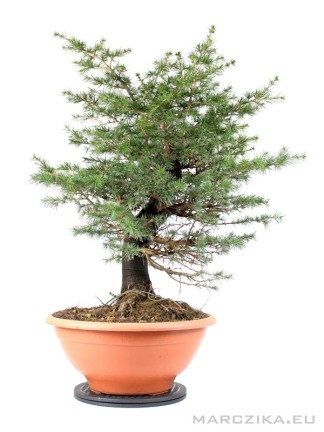
Cedrus deodara is a repeatedly trained bonsai raw material, commonly known as Himalayan cedar. The light green needles of the tree have a slightly golden tone, and the oils in the bark give off a characteristic aromatic scent...
It is also a bonsai plant that is loved for its flowers and beautiful, decorative, large-sized yellow fruit. The plant grown in Japan was started and shaped in the classic Moyogi bonsai style...
A juniper bonsai with a height of 32 cm measured from the edge of the bonsai pot, made from bonsai raw material that has been trained several times. The plant - if we do not change it (significantly) - will grow a completely compact canopy within...
Buxus is one of the best-known small-leaved shrubs for bonsai. A fast-growing and easy-to-proliferate plant, it responds well to pruning and will greatly appreciate all care...
Berchemia racemosa, which has few Hungarian counterparts. It is an unusual tree species that is also used as a bonsai and comes from the Rhamnacea family. It is named after the Dutch botanist Berthout van Berchem and has some great qualities that fit perfectly into the world of bonsai...
An easy-to-maintain outdoor bonsai that is decorated with light green fan-shaped leaves in the summer and a beautiful golden yellow canopy in the fall. From spring to autumn, always keep it in a sunny place and water it with plenty of water and fertilizing it abundantly. Maidenhair pines, which belong to the deciduous pine species...
Photinia villosa raw material bonsai. Photinia can perform well all year round as a complementary plant outside of bonsai exhibitions and in our garden and terrace. The deciduous shrub belonging to the rose family is also commonly referred to as Oriental Fotinia or Christmas Berry...
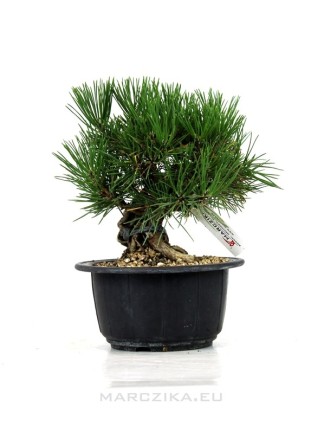
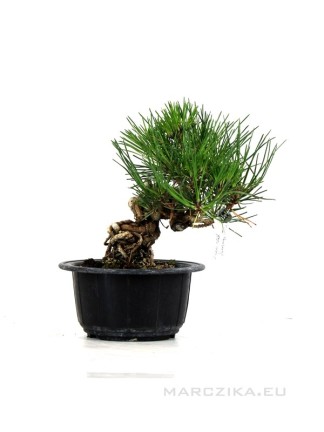
Pinus thunbergii belongs to the genus Pinus, also known as Japanese black pine. This beautiful pine is characterized by delicate needle-like green leaves that always grow in pairs. In spring, Thunbergii produces small reddish flowers and later grows small brown cones. Black pine is one of the most hardy bonsai tree species because it can withstand almost any relentless, harsh ...
Pinus thunbergii belongs to the genus Pinus, also known as Japanese black pine. This beautiful pine is characterized by delicate needle-like green leaves that always grow in pairs. In spring, Thunbergii produces small reddish flowers and later grows small brown cones. Black pine is one of the most hardy bonsai tree species because it can withstand almost any relentless, harsh environment. It has an irregularly shaped gray bark that turns black as the tree ages. Japanese black pines live best in full sun and high temperatures, but...
Berberis thunbergii, Japanese barberry bonsai material in a growing container. This tree with old bark that has been grown for several years and has multiple nursery roots. Its aesthetic shape and massive trunk have great potential to become a spectacular bonsai. Berberis are deciduous shrubs that are covered in colorful foliage in autumn. Even in the spring-summer ...
Ulmus parvifolia in shohin size, commonly known as Chinese elm. In terms of upbringing, it prefers full sun, bright space and / or filtered light. However, for ideal development, it needs more light, it can withstand direct sunlight well, but not extreme heat. In temperate climates, we can leave it outdoors even in the winter months, as long as there are no strong frosts. The best thing is to actually take your plant to a cool but frost-free room for the winter. In the case...
Ulmus parvifolia in shohin size, commonly known as Chinese elm. In terms of upbringing, it prefers full sun, bright space and / or filtered light. However, for ideal development, it needs more light, it can withstand direct sunlight well, but not extreme heat. In temperate climates, we can leave it outdoors even in the winter months, as long as there are no strong frosts. The best...
Diospyros kaki, also known as Oriental persimmon in glazed bonsai pot.
This tiny crop of persimmon can taste well in several planting media, not really picky. It prefers a medium with good drainage, so Akadama is the best choice. It loves lots of light, bright space and plenty of nutrients. Oriental persimmon likes ...
Metasequoia glyptostroboides, commonly known as The Dawn Redwood. Dawn redwoods are very tall trees in nature with straight habitus with soft needle-shaped foliage. Redwoods are native to China and are among the deciduous pines. It is very popular as a bonsai, in most cases for group planting, effective in the ‘Yose ue’ style (forest style). Taking care of Metasequoia bonsai is otherwise quite simple. This bonsai tree species grows relatively ...
Ginkgo biloba bonsai, commonly known as Maidenhair tree, has a spectacular rustic look.. This type of Deciduous pine is one of the most sought after and popular bonsai ingredients. In autumn, the visual world of its golden fan-shaped leaves can stand out from the plants in our garden. The winter view of its branch system gives a slightly rustic effect ...
Diospyros kaki, also known as Oriental persimmon in glazed bonsai pot.
This tiny crop of persimmon can taste well in several planting media, not really picky. It prefers a medium with good drainage, so AKADAMA is the best choice. It loves lots of light, bright space and plenty of nutrients. Oriental persimmon likes
Ginkgo biloba in Chinese antifreeze bonsai pot. Among the deciduous pines, Ferns are one of the most sought-after bonsai ingredients. Their fan-shaped leaves turn golden yellow in the fall and fall off by the end of the fall. The winter sight of its branch system has a rustic effect and in spring they gently start ...
Ulmus parvifolia in shohin size, commonly known as Chinese elm. In terms of upbringing, it prefers full sun, bright space and / or filtered light. However, for ideal development, it needs more light, it can withstand direct sunlight well, but...
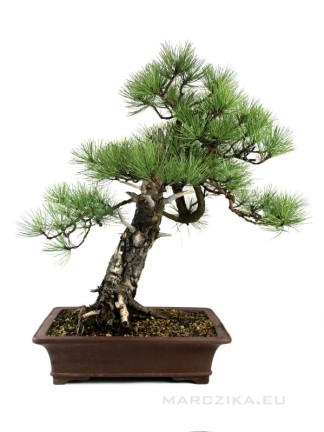
Pinus nigra, commonly known as Black Pine. Black pine is one of the most hardy bonsai tree species because it can withstand almost any ruthless, harsh environment. It has an irregularly shaped gray bark that slowly turns black as the tree ages. Black pines live in full...
The Korean Hornbeam, Carpinus coreana as raw material bonsai. It is a deciduous tree native to Asia. The beautiful pleated foliage makes Korean hornbeam especially useful for group plantings as well as for shaping bonsai patterns. The growth rate of hornbeam species is variable, which is especially important if they are grown with...
Ginkgo biloba bonsai in handmade bonsai pot. Among the deciduous pines, Maidenhair tree is one of the most sought-after bonsai ingredients. Their fan-shaped leaves turn golden yellow in the fall and fall off by the end of the fall. The winter sight of its branch system has a rustic effect and in spring they gently start shoots from tiny green buds. Ginkgo biloba is one of the rare...
Ginkgo biloba bonsai, commonly known as Maidenhair Tree. Deciduous pine is one of the most sought after bonsai ingredients. In autumn, the visual world of its golden fan-shaped leaves can stand out from the plants in our garden or terrace. The winter view of its branch system gives a slightly rustic effect and, with the arrival of spring, they gently start shoots from tiny green buds. Ginkgo biloba ...
Ginkgo biloba bonsai, commonly known as Maidenhair tree. Deciduous pine is one of the most sought after bonsai ingredients. In autumn, the visual world of its golden fan-shaped leaves can stand out from the plants in our garden. The winter view of its branch system gives a slightly rustic effect and, with the arrival of spring, they gently start shoots from tiny green buds. Ginkgo biloba is one...
Euonymus alatus, commonly known as Burning bush shohin in size category. A popular shrub for its spectacular autumn foliage and beautiful, colorful crop. Slow-growing, slightly serrated foliage that feels good in a sunny or semi-shady place. In winter, the plant can be overwintered in unheated conditions. In this case, you do not need light as you sleep, but you need to water every two weeks. In case of outdoor wintering,...

Marczika Horticulture and Trade Ltd. wants to provide those who love bonsai, orchid and tillandsia not only with a large variety of plants, but also all tools and accessories needed to keep them at amateur, hobby and professional levels.
COMPANY DATA:
Marczika Horticulture and Trade Ltd.
Napvirág utca 4-2., Érd, H-2030
Mobil: +36 30 680 5420
Tel/Fax: +36 23 375 094
E-mail: info@marczika.hu
Tax number: 13324711-2-13
Registration number: Pest Megyei Bíróság, 13-09-099915
Bank account number HUF: CIB Bank 10700574-68549639-51100005 / Bank account number EUR: CIB Bank HU0510700574-68549639-50000005 (CIBHHUHB)
Kártyás fizetés szolgáltatója:

Elfogadott kártyák: